Engineered for the dock edge.
Hydraulic Truck Restraints That Hold Trailers at the Dock
The worst moment on any loading dock is a trailer that moves while a forklift is inside it. Premature departure, trailer creep, and dock walk cause the injuries and equipment losses that every facility manager knows about — and the fix is mechanical: a restraint that physically locks the trailer to the dock until the work is done.
Wilcox International supplies, installs, and services hydraulic truck restraints across Canada and the United States, in facilities running everything from a few dozen trailer moves a day to continuous 24/7 cross-dock operations.
What a Hydraulic Restraint Actually Buys You
Mechanical chocks and hook restraints work when everything goes right. Hydraulic restraints are what you buy when you cannot afford the day something goes wrong.
01.
A Lock, Not a Suggestion
A hydraulic barrier engages the trailer’s rear wheels or rear impact guard with constant hydraulic force — no springs to fatigue, no mechanism depending on the driver’s memory. The trailer cannot roll, creep, or walk until the system releases it.
Communication Built Into the Sequence
Red and green interior and exterior lights, audible alerts, and optional leveler and door interlocks make restraint status impossible to misunderstand. The dock does not open until the trailer is secured, and the driver does not pull out until the light changes.
Built for Trailer Populations, Not One Trailer
Mixed fleets are normal: liftgates, drop-frame trailers, intermodal containers, and bent rear guards all arrive at the same doors. We match hook-style, wheel-engaging, or combination restraint to the trailer range you actually receive — and flag the outliers during a site survey.
Survives Winter and High Cycles
Hydraulic cylinders absorb daily engagement shock far better than mechanical linkages, and sealed hydraulic packages keep working through freeze-thaw cycles, road salt, and washdown schedules that destroy lighter equipment.
05.
One System With the Rest of the Dock
Restraints integrate with your dock levelers, doors, vehicle shelters, and safety signalling — and with our own service programs, so the restraint, the leveler, and the door above it are maintained on one schedule by one partner.
Choosing the Right Restraint Type
Four configurations cover most facilities. The right one comes down to your trailer mix, dock face construction, and how much integration you want with the rest of the dock safety system.
01.
Standard Hydraulic Truck Restraints
Best for: general warehouse and distribution operations with standard dry-van fleets. Automatic engagement on leveler deployment, release on leveler stow, and a proven hydraulic barrier for the majority of trailers a facility receives.
Low-Profile Hydraulic Truck Restraints
Best for: facilities receiving intermodal containers, low ICC bars, and trailers with limited rear-guard clearance. The low-profile barrier engages where standard restraints cannot reach, without changing the dock face.
02.
Hydraulic Restraints with Integrated Safety Lights
Best for: docks where the driver communication is as important as the restraint. Integrated red/green signalling shows restraint status inside and outside the building, and ties into door and leveler interlocks where required.
02.
Heavy-Duty Hydraulic Truck Restraints
Best for: heavy-impact industrial environments — steel, aggregate, and high-volume cross-docks. Reinforced barriers and heavier hydraulic packages for facilities that treat standard duty as a consumable.
Hydraulic or Mechanical? An Honest Comparison
Engagement: hydraulic engages by push-button with constant holding force; mechanical relies on springs, gravity, or driver-applied chocks.
Consistency: hydraulic performs identically in ice, snow, and wear; mechanical performance declines with spring fatigue and linkage wear.
Cycle life: hydraulic cylinders absorb engagement shock; mechanical linkages transfer it into the dock face.
Cost: mechanical costs less up front. Hydraulic costs less over a decade of high-cycle service — and removes the failure mode that mechanical systems cannot design out.
Where mechanical still wins: low-volume docks with a few moves per week and a single standard fleet.
Service That Keeps Restraints Trustworthy
A restraint is a life-safety device. It earns trust through scheduled verification, not through looking fine from the driver’s seat. Our preventive maintenance covers restraints alongside levelers, doors, and seals — thousands of service calls a year across North America.
01.
Hydraulic Integrity
Hoses, fittings, cylinders, and seals inspected for leaks, chafe, and pressure loss — the failure modes that turn a restraint into a decoration.
Engagement Testing
Full cycle testing with compatible trailers: engage, verify hold, release. We record results so the inspection history exists when an auditor or insurer asks for it.
Communication and Interlocks
Interior and exterior lights, audible alerts, and control interlocks verified so the sequence is enforced, not just suggested.
Mounting and Structure
Anchors, mounting hardware, and the dock face itself checked for corrosion and movement — a restraint is only as strong as what holds it.
trusted support.
Installation and Emergency Support
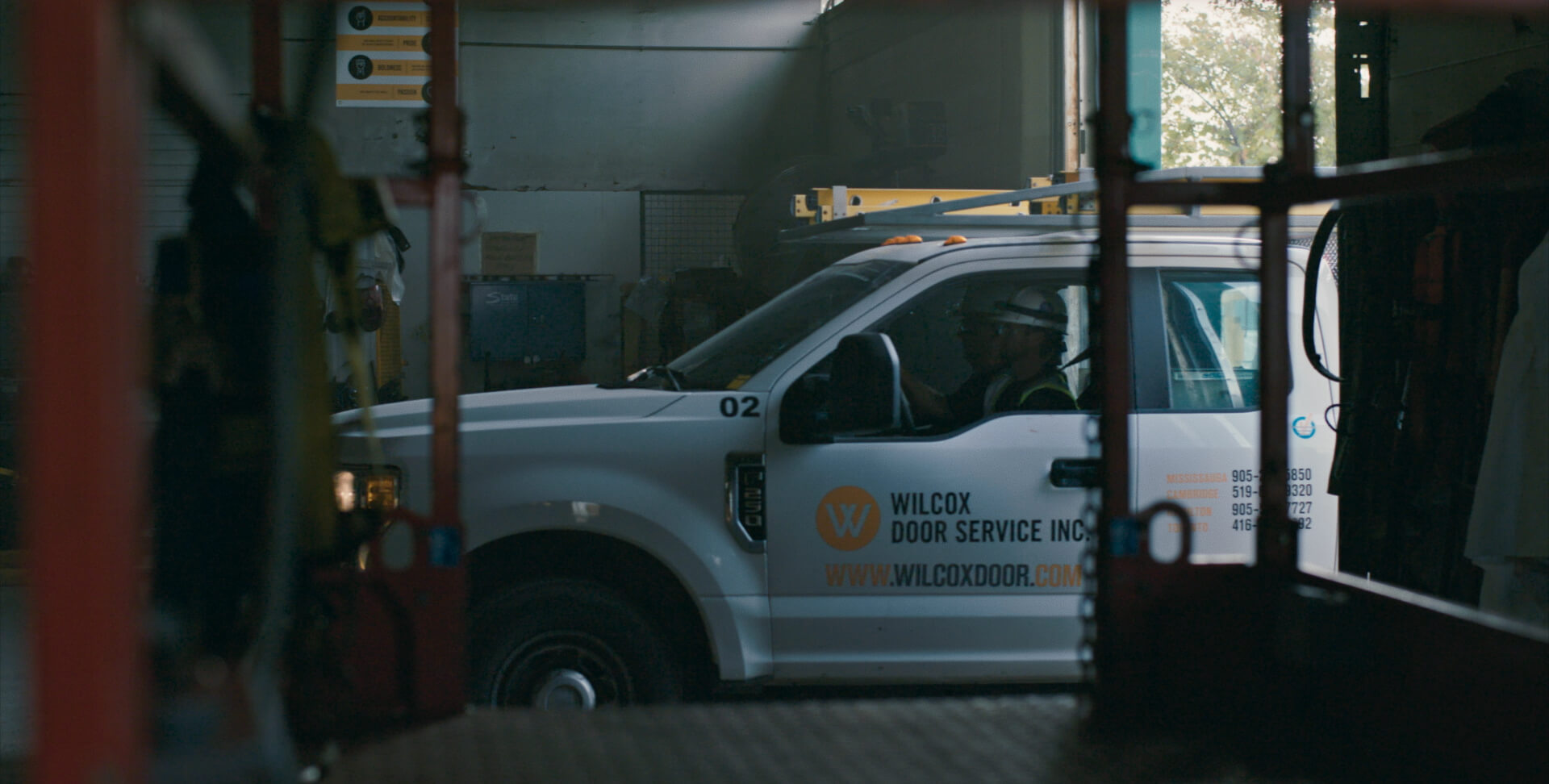
We survey the dock face, trailer mix, and existing equipment before quoting, then handle mechanical installation, electrical tie-ins, and integration with your levelers and doors under one contract. When a restraint fails, our 24/7 emergency service covers facilities across Canada and the United States.
- Precision installations for industrial and commercial facilities
- Tailored maintenance programs to prevent downtime
- 24/7 emergency response with rapid dispatch
- Retrofits for improved insulation, automation, and security
get in touch.
Get a Custom Quote for Your Project
Information Request
Get a personalized estimate for door repairs, dock installations, and preventive maintenance. Our certified technicians are on call 24/7 across Canada and the United States.
Contact Details
Got questions about pricing, installation or maintenance? Our experts are standing by and usually reply within 24 hours.
Whether you’re planning a new project or need ongoing support, we’re here to help every step of the way.